
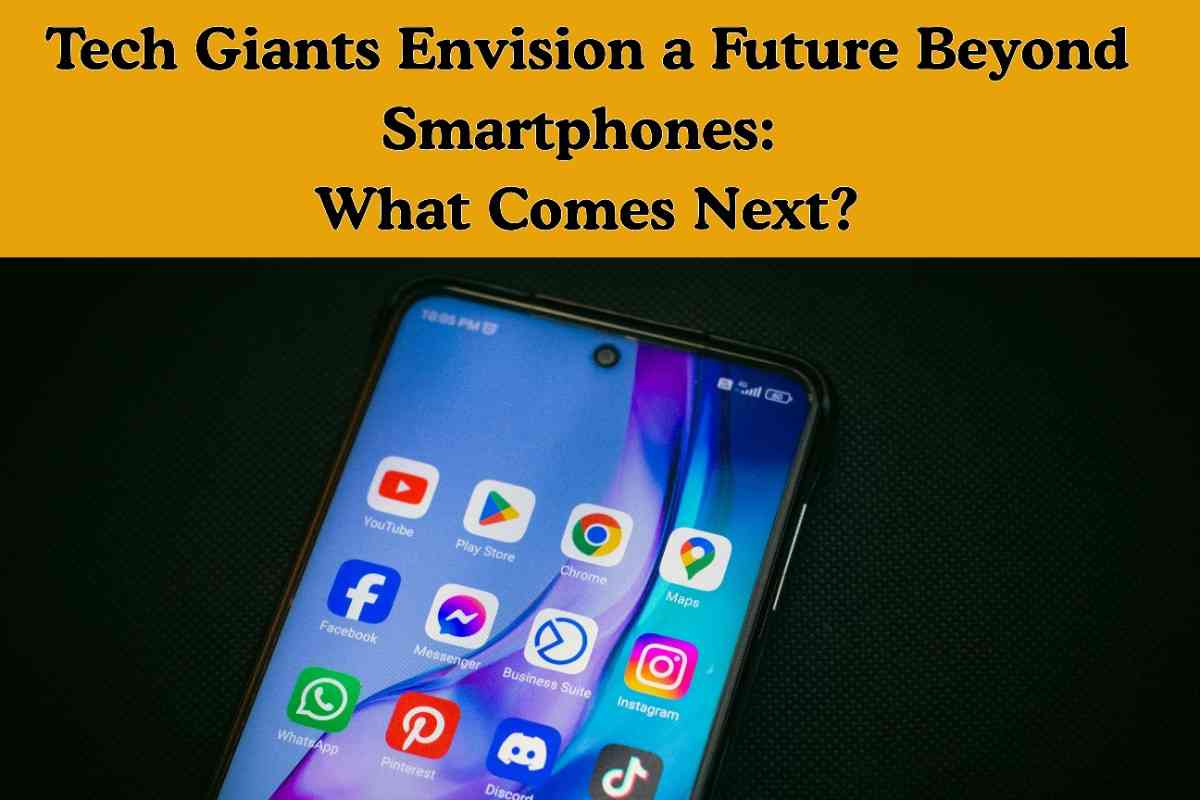
For more than 15 years, smartphones have been at the center of our digital lives. We use them to talk, work, shop, learn, and relax. But today, something interesting is happening. Tech giants envision a future beyond smartphones, and they are already building the next generation of technology.
Companies like Apple, Google, Meta, Amazon, and Microsoft believe the smartphone era is slowly reaching its limits. They are now investing heavily in new ideas such as artificial intelligence (AI), augmented reality (AR), virtual reality (VR), wearables, and spatial computing.
In this article, we will explore why smartphones may not always be our main device, what could replace them, and how big tech companies are shaping the post-smartphone era. I have Explained every thing in simple words. so anyone can understand the future of technology.
Why the Smartphone Era Is Reaching Its Limits
Smartphones are still powerful and useful, but they are no longer changing as fast as they once did. There are several reasons for this shift.
1. Market Saturation
Almost everyone who wants a smartphone already has one. In many countries, people upgrade their phones less often because:
-
New models look similar to old ones
-
Improvements are small, not revolutionary
-
Prices are getting higher
This makes it harder for companies to grow by selling only smartphones.
2. Innovation Plateaus
In the early years, smartphones changed quickly. We saw:
-
Touchscreens replace buttons
-
Cameras improve dramatically
-
App stores transform daily life
Now, most phones offer the same features. Better cameras, faster chips, and longer battery life are nice, but they are not exciting enough to change how we live.
3. Changing Consumer Behavior
People want technology that:
-
Feels more natural
-
Works hands-free
-
Blends into daily life
Typing and staring at a screen all day feels tiring. Users want smarter, simpler, and more immersive experiences. This is why technology beyond smartphones is becoming so important.
How Tech Giants Envision a Post-Smartphone Future
Each major tech company has its own vision for what comes after smartphones. Let’s look at how they are preparing for the future.
Apple’s Vision: Spatial Computing & Wearables
Apple’s strategy goes far beyond the iPhone.
-
Apple Vision Pro shows Apple’s belief in spatial computing, where digital content blends with the real world.
-
Instead of holding a phone, users interact using their eyes, hands, and voice.
-
Apple is also expanding its wearable technology future with:
-
Apple Watch
-
AirPods
-
Health-focused sensors
-
Apple’s post-iPhone strategy is clear: create an ecosystem where devices work together, and the smartphone becomes just one part of it.
Meta’s Bet on AR, VR, and the Metaverse
Meta (formerly Facebook) strongly believes that AR and VR are the future.
-
Meta’s Quest headsets focus on virtual reality for gaming, work, and social interaction.
-
Smart glasses aim to bring digital information directly into the real world.
-
Meta wants people to communicate and work in immersive virtual spaces instead of using phone screens.
This vision supports the idea that mixed reality vs smartphones could become the next big shift.
Google’s AI-First Hardware Ecosystem
Google is building a future where AI-powered devices replace phones as our main interface.
-
Google Assistant already helps users without touching a screen.
-
AI can understand voice, images, and context.
-
Google is investing in:
-
Smart home devices
-
Wearables
-
AI-driven search and productivity tools
-
In Google’s future hardware ecosystem, devices become smarter, and users rely less on screens.
Amazon and Ambient Computing
Amazon focuses on what it calls ambient computing.
-
Devices like Alexa are always available, listening, and ready to help.
-
The goal is technology that works in the background without effort.
-
Instead of opening apps, users simply speak or receive automatic suggestions.
This approach supports a world where technology is everywhere—but smartphones are not always needed.
Microsoft and Mixed Reality for Work
Microsoft sees the post-smartphone era mainly through work and productivity.
-
Tools like HoloLens focus on mixed reality for business, education, and training.
-
Microsoft combines:
-
Cloud computing
-
AI
-
Mixed reality
-
Their vision is not about replacing phones overnight, but about creating new ways to work without screens.
Technologies That Could Replace Smartphones
So, what exactly could replace smartphones? The answer is not one single device, but a mix of new technologies.
Augmented Reality Glasses
AR glasses may become one of the strongest future devices replacing smartphones.
-
They show digital information over the real world.
-
Navigation, messages, and notifications appear in front of your eyes.
-
No need to take out a phone or look down.
Many tech giants believe AR glasses are key to the future of smartphones replacement.
Artificial Intelligence Assistants
AI assistants are becoming more powerful every year.
-
They can understand voice commands and context.
-
They can predict what you need before you ask.
-
AI reduces the need for apps and screens.
In the future, AI could be your main interface with technology.
Wearables and Smart Devices
Wearables are already part of daily life.
-
Smartwatches track health and notifications.
-
Earbuds offer voice control and real-time translation.
-
Smart rings and sensors collect data quietly.
These devices support the idea of technology beyond smartphones, where many small devices replace one big screen.
Brain–Computer Interfaces (Early Stage)
This technology is still experimental, but very important.
-
Brain–computer interfaces allow users to control devices using thoughts.
-
Companies are researching ways to connect the human brain directly to computers.
-
This could redefine what comes after smartphones in the long term.
What This Shift Means for Consumers
The post-smartphone era will change how people use technology. This brings both benefits and challenges.
Convenience vs Privacy
-
Devices will become more personal and always active.
-
This raises concerns about data collection and privacy.
-
Users must balance convenience with control over their information.
New User Experiences
-
Interfaces will feel more natural and immersive.
-
Voice, gestures, and eye tracking will replace typing.
-
Learning new systems may feel strange at first.
Learning Curves
-
New technology takes time to understand.
-
Older users may need extra support.
-
Companies must focus on simple and user-friendly design.
When Will Smartphones Be Replaced?
Many people ask: Will smartphones disappear soon? The answer is no, not yet.
Short-Term Outlook
-
Smartphones will remain important for many years.
-
They will continue to improve, especially with AI.
Long-Term Outlook
-
Smartphones may slowly become secondary devices.
-
New devices will take over specific tasks.
-
The transition will be gradual, not sudden.
Smartphones won’t disappear overnight, but their role will change.
Final Thoughts on the Future Beyond Smartphones
The idea that tech giants envision a future beyond smartphones is no longer science fiction. It is already happening.
-
Apple is focusing on spatial computing and wearables.
-
Meta is investing in AR, VR, and immersive worlds.
-
Google is building an AI-first future.
-
Amazon is creating ambient, voice-driven technology.
-
Microsoft is shaping mixed reality for work and learning.
The post-smartphone era will not replace everything at once. Instead, it will introduce new ways to interact with technology, making it more natural, helpful, and integrated into daily life. if you want to read more About Outdoor gadgets